
Living Upstream —What It Means to Be in the Sourlands
Executive Summary — Why This Matters
The Sourlands is a headwaters landscape — a place where groundwater is replenished, streams begin, and drinking water reliability is quietly determined long before it becomes visible downstream. Because storage capacity here is limited, incremental land-use changes can accumulate into significant long-term effects on water availability, flood behavior, ecosystem health, and infrastructure stress. Living in the Sourlands therefore carries a form of upstream responsibility rooted not in regulation or sentiment, but in physical reality. Stewardship here is most effective when it preserves the landscape’s ability to absorb, store, filter, and release water gradually over time.
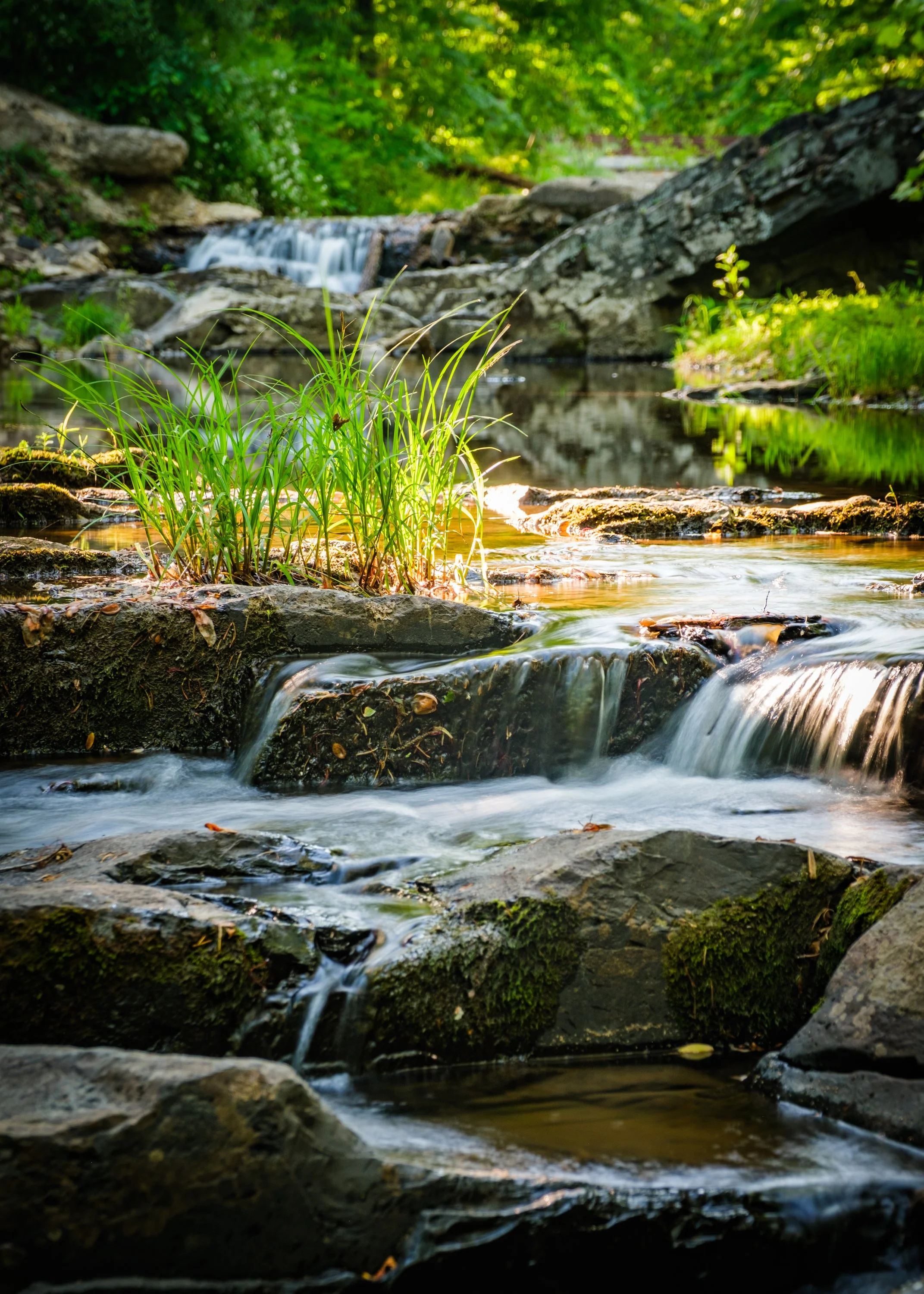
Zion Crossing. Photo courtesy of Jeff Gates
1. Living Where the Water Begins
To live in the Sourlands is to live upstream.
This is not a slogan or a sentiment.
It is a physical condition.
The Sourlands form a headwaters landscape — a place where rain becomes groundwater, where small streams originate, and where the foundations of larger river systems are established. What happens here does not remain local. It moves quietly and continuously downstream, shaping water quantity, water quality, and ecological stability far beyond township boundaries.
In many places, water passes through.
In the Sourlands, water begins.
Rainfall first encounters forest floors, thin rocky soils, fractured bedrock, and dense networks of small streams. These first encounters determine how quickly water moves, how clean it remains, and how much is available during dry periods. Because of this, everyday decisions on the land can influence conditions that may not become visible until years later.
Headwaters do not announce themselves.
They function through accumulation.
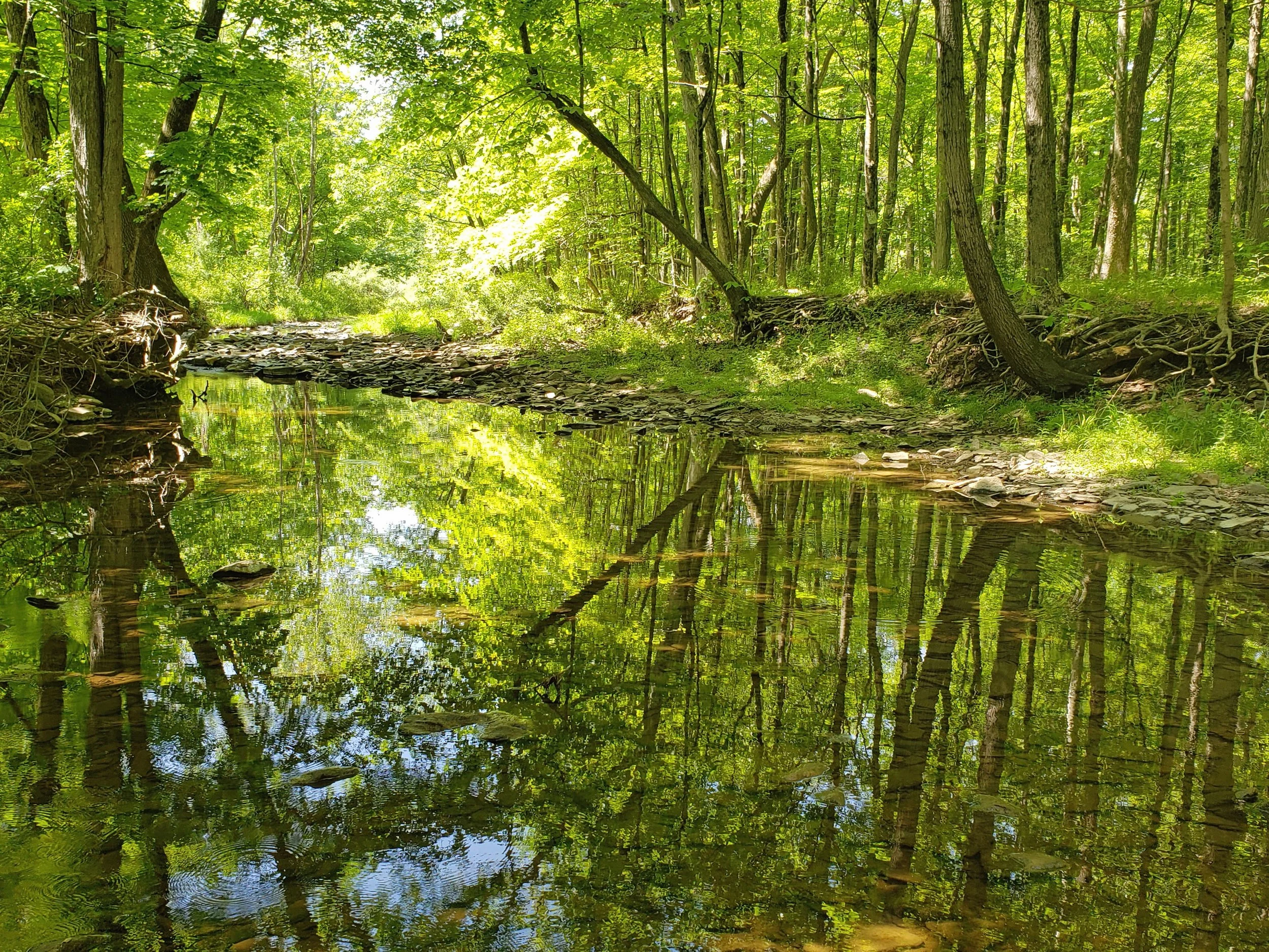
Rock Brook Trail Creek. Photo courtesy of Yvonne Kunz.
2. Why the Sourlands Is Different
The Sourlands is not defined simply by scenic ridges or preserved open space. Its character emerges from how multiple physical conditions interact:
Thin, rocky soils
Shallow groundwater storage
Bedrock near the surface
Steep slopes
Extensive forest cover
Dense networks of first- and second-order streams
Individually, these features are not unusual. Together, they create a system where small disturbances can produce disproportionately large effects.
The Sourlands is both resilient and fragile.
It is resilient because intact forests and undisturbed soils can regulate water flow quietly for generations. It is fragile because once these features are incrementally altered, recovery can take decades — and may never fully restore original capacity.
Understanding this dynamic is essential to understanding what it means to live here.
3. Headwaters Are Defined by Capacity, Not Size
The Sourlands are not characterized by large rivers or broad floodplains. Their defining feature is capacity — the land’s ability to absorb water, slow it, filter it, store it underground, and release it gradually.
This capacity directly affects:
Private well reliability
Streamflow during dry periods
Flood timing and intensity
Water temperature and ecosystem health
Long-term drinking water security
Recharge occurs when water infiltrates forest soils and fractured rock, becoming groundwater stored below the surface. Because soils are shallow and storage is limited, timing matters. Water that moves too quickly across the land bypasses infiltration, reducing recharge and increasing runoff.
When withdrawals exceed recharge over long periods, aquifers decline quietly. Wells deepen, baseflow weakens, and shortages emerge slowly rather than dramatically.
Headwaters landscapes function much like savings accounts for water: long-term stability depends on maintaining deposits that match or exceed withdrawals.
4. Forest, Soil, and Water: A Coupled System
In the Sourlands, forest, soil, and water operate as a single connected system rather than separate elements.
Forests act as primary infrastructure. Tree canopies soften rainfall. Leaf litter slows surface flow. Root systems stabilize thin soils and create pathways for infiltration. Beneath this layer, shallow soils and bedrock limit storage, making intact ground cover essential for recharge.
When forests are cleared, soils compacted, or slopes regraded, water moves faster and warmer into streams, bypassing natural filtering and cooling processes.
In larger river basins, downstream areas may absorb such changes. In headwaters systems, impacts are immediate and localized. Small streams respond quickly, and their health depends on steady inputs of cool, filtered groundwater.
5. How Small Decisions Add Up
Most change in the Sourlands occurs incrementally rather than dramatically.
A driveway extension.
A clearing for a structure.
An approval that appears modest in isolation.
Each action may comply with technical standards and seem manageable on its own. Over time, however, cumulative effects can reduce the landscape’s capacity to absorb stress. Forest loss, soil disturbance, impervious surfaces, and increased water demand interact, accelerating runoff and diminishing recharge.
These changes rarely appear overnight. They become visible through patterns: faster flooding, warmer streams, reduced summer flow, or increased vulnerability during extended dry periods.
No single decision is typically responsible.
The outcome emerges from accumulation.
6. Responsibility Upstream Is a Physical Reality
Living upstream does not mean freezing the landscape or preventing all change. It means recognizing where responsibility lies within the system.
In headwaters areas, responsibility is upstream by definition. Decisions made here shape conditions downstream, including water availability for communities that rely on the same aquifers and stream systems.
This is not a moral claim.
It is a matter of systems physics.
Capacity, once diminished, is difficult to restore. Forest soils rebuild slowly. Groundwater systems respond over long timescales. Stream temperatures can rise quickly but take years to recover.
For this reason, preserving capacity before it is lost is more effective than attempting to repair damage after problems become visible.
7. What Stewardship Looks Like in Practice
Stewardship in the Sourlands is rarely dramatic. It consists of cumulative choices that maintain the system’s ability to function.
Examples include:
Keeping forests intact where they slow and filter water
Minimizing disturbance on steep slopes and thin soils
Designing roads, driveways, and clearings to follow natural contours
Allowing rainfall to infiltrate rather than channeling it away rapidly
Monitoring patterns of incremental change rather than isolated projects
Stewardship also includes the willingness to pause. When a proposal meets technical standards but contributes to a broader pattern of capacity loss, careful consideration may involve exploring alternatives, mitigation strategies, or slower implementation.
This responsibility is shared among residents, landowners, planners, boards, engineers, and institutions.
8. A Shared Condition, A Shared Ground
Living upstream is not an identity or a policy position.
It is a shared condition created by geography.
Everyone who lives, works, builds, or makes decisions in the Sourlands participates in shaping how this headwaters system functions. No single individual or institution controls outcomes, yet collective choices determine whether the landscape continues to sustain reliable water supplies and ecological stability.
Recognizing this shared condition allows discussion without blame and precaution without alarm. It reframes restraint not as limitation, but as preservation of future options.
Water is common ground.
It connects residents, communities, and downstream regions alike.
Protecting its source does not require dramatic intervention. It requires continuity, awareness, and decisions aligned with how the system actually works.

A Phoebe at the Hopewell Sourlands Trail creek. Photo courtesy of Michelle Baker.
Closing Reflection
Living upstream does not mean stopping change.
It means guiding change so that the landscape can continue to support life — here and downstream — for generations to come.
Responsibility in headwaters regions arises naturally from location.
It is simply the consequence of living where the water begins.