[ Project ]
Forest Restoration
The Sourland Mountain Region has faced significant ecological challenges in recent years. Since 2020, more than one million trees — nearly 20 percent of the region’s total—have been lost to the emerald ash borer, a destructive invasive insect. This loss has had far-reaching effects on the forest’s ability to provide essential ecosystem services, including filtering air and water, reducing stormwater runoff, sequestering carbon, and offering critical habitat for wildlife. Among the species affected are 57 state-listed threatened and endangered species that rely on the Sourland region for survival.
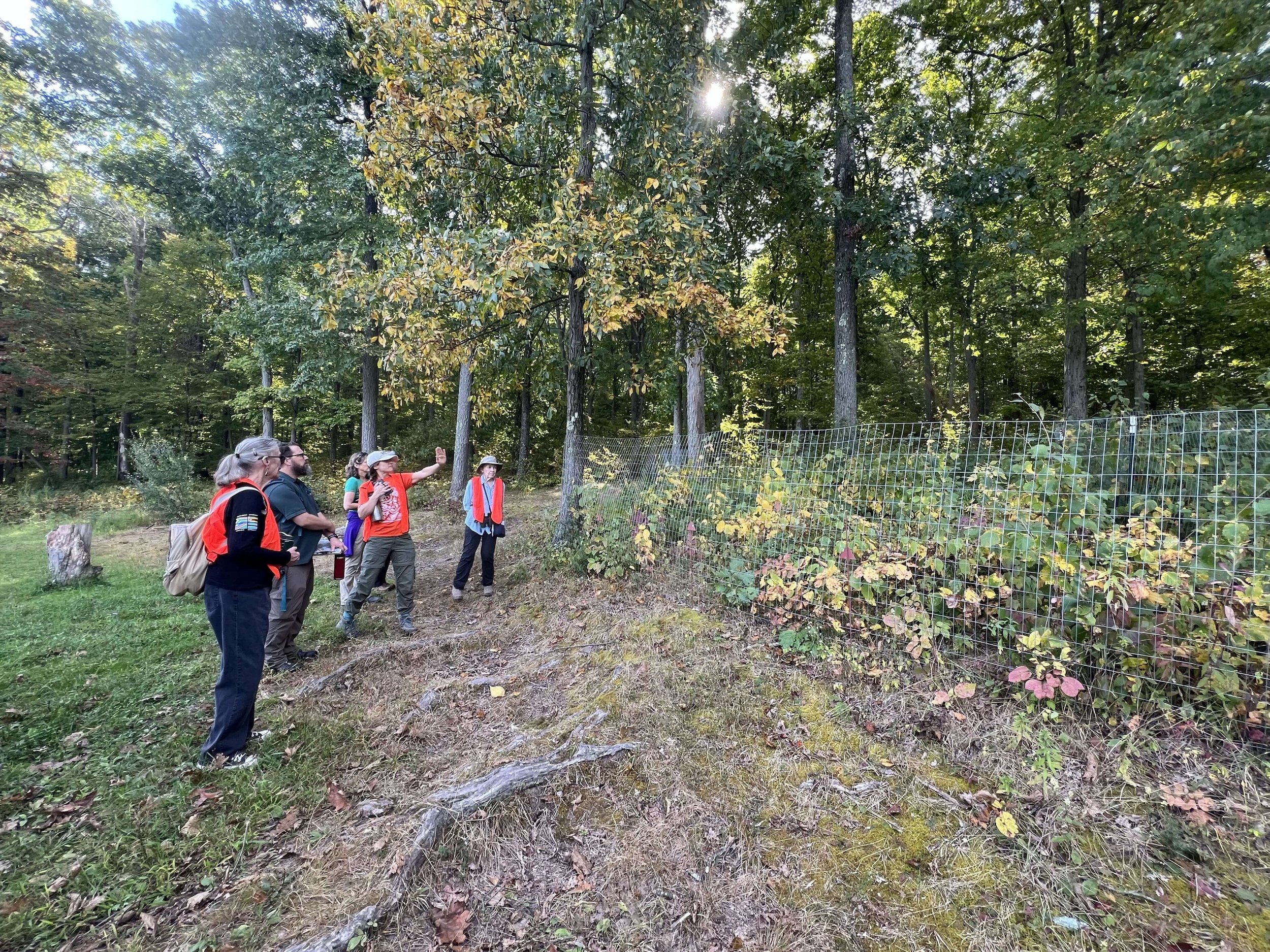

With the help of every member, volunteer, partner, and grantor, we’ve planted …
60,000 trees
in 5 years
These efforts contribute to restoring the forest, sequestering carbon, and reducing flooding! 50,000 is a lot of trees, but it’s just a start. We really need to ramp up our efforts to restore the forest to offset the devastating loss of over one million trees in the last few years.

Private Land
Thanks to a generous US Forest Service (USFS) grant in partnership with FoHVOS Invasive Species Strike Team, we’ve begun planting on private land within the USFS priority area. This work will help provide critical habitat and strengthen connectivity to help keep wildlife populations healthy.

Public Parks and Preserves
The Sourland Conservancy has partnered with Somerset County Park Commission, Mercer County Park Commission, Montgomery Township, Hillsborough Township, the Watershed Institute, New Jersey Conservation Foundation, D&R Greenway Land Trust, and Friends of Hopewell Valley Open Space to plant trees and shrubs on their property and maintain those planting sites.
[ Vision ]
Threatened Species Protection
We have expanded our Sourland Forest Restoration Project to include a new Ecological Preservation Internship position! The Sourland Mountain Region is home to 57 threatened and endangered species. Our forest is undergoing significant changes, so we must take intentional steps now to protect and document the rare plant communities that inhabit it. Grants from the Northfield Bank Foundation and Green Matters generously fund this exciting project.
Read an interview with our current Forest Restoration Intern, Renee Galimba, to learn more about this initiative. This interview was originally published in the Sourland Journal, Spring 2024.
Volunteer Opportunities