
Camouflage
By Jim Amon
All animals can’t rely upon fang or claw to defend themselves. Some have developed unexpected defenses, like vultures who will projectile vomit at a predator, or fish that travel in large numbers so that any one fish is likely to escape, or caterpillars of monarch butterflies that eat toxic plants and become toxic themselves. Many animals rely on camouflage for defense. If you can’t see them, you can’t eat them for lunch. Following are some examples of animals that blend nicely into their habitats.
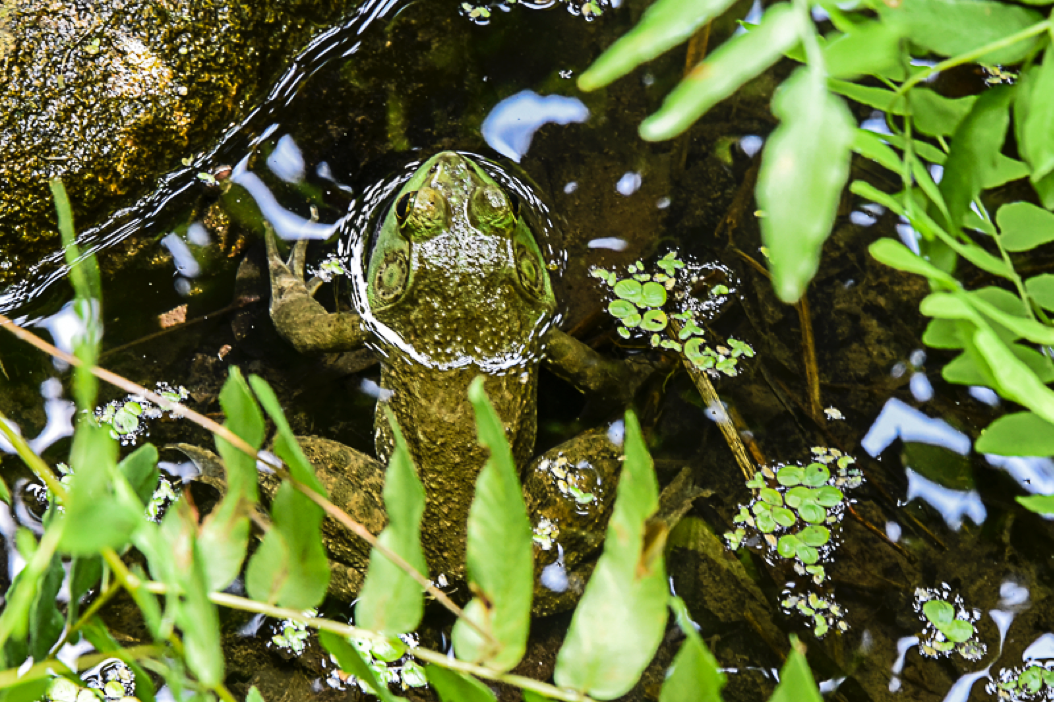
Green frogs match the vegetation around them at the edge of the pond and the occasional stone.
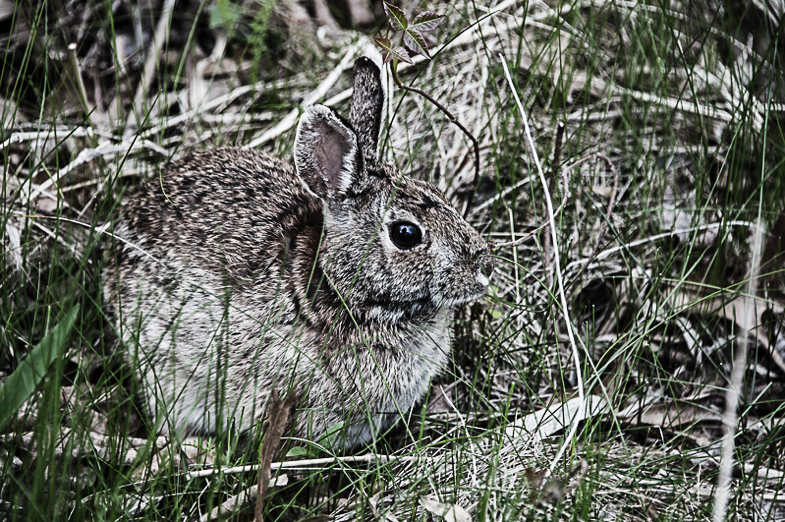
Cottontail rabbits are pretty fast runners and they run in a zig-zag pattern to discourage predators chasing them but they also blend nicely with the fields they live in.
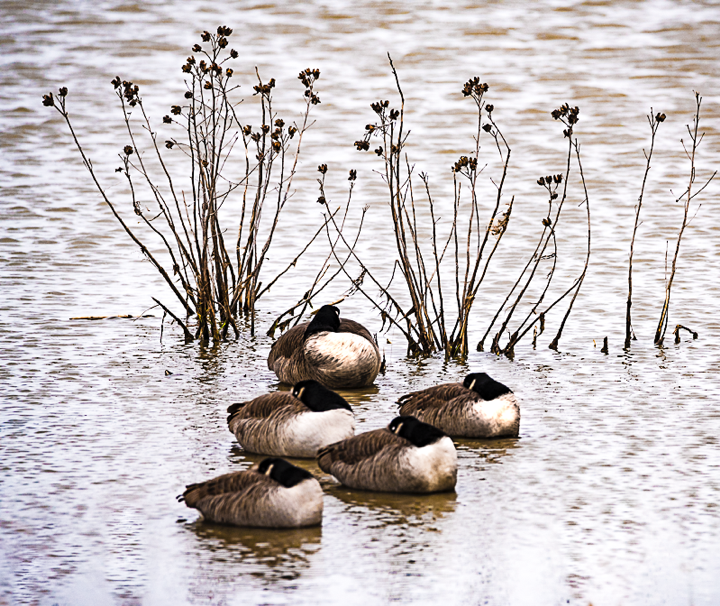
Canada geese are strikingly obvious when they are on land, and their continuous honking doesn’t help disguise their presence but head tucked in and in the water they look like a hummock.
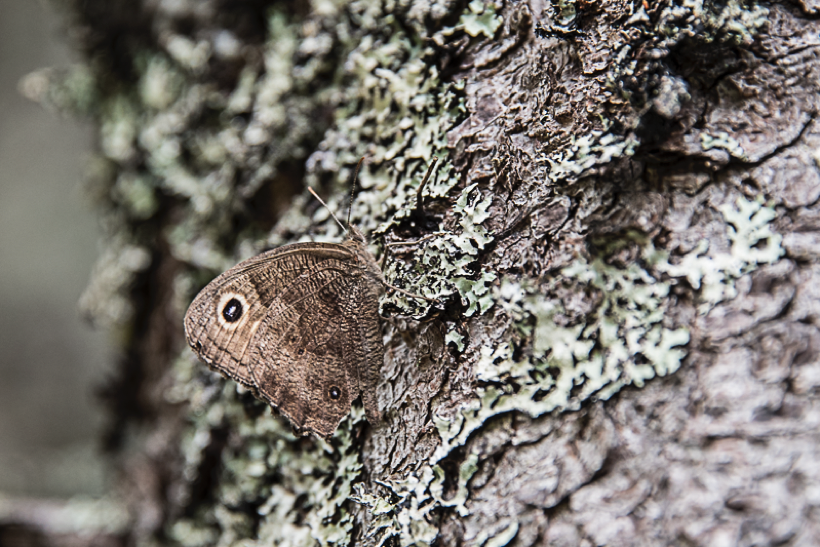
Wood nymph butterflies often live on woodland edges and when they are on a tree they are hard to pick out.
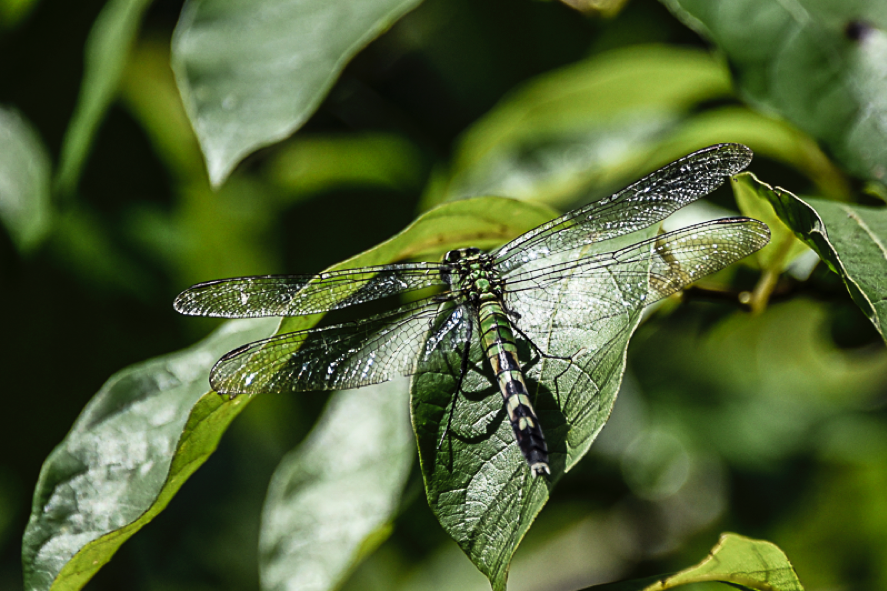
Many dragonflies have transparent wings but this one also has a body that blends with the plants it stops at.
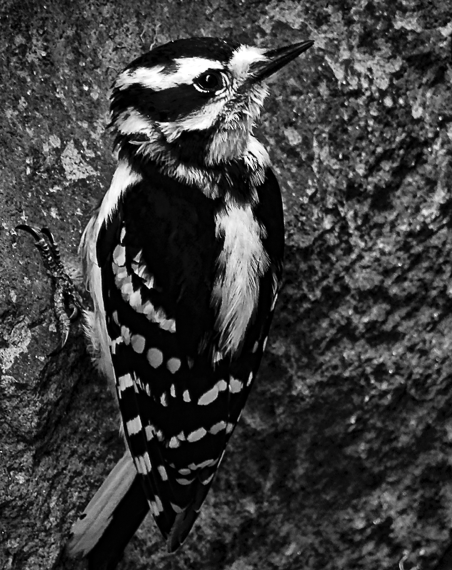
A female downy woodpecker is black and white like the bark on many trees.
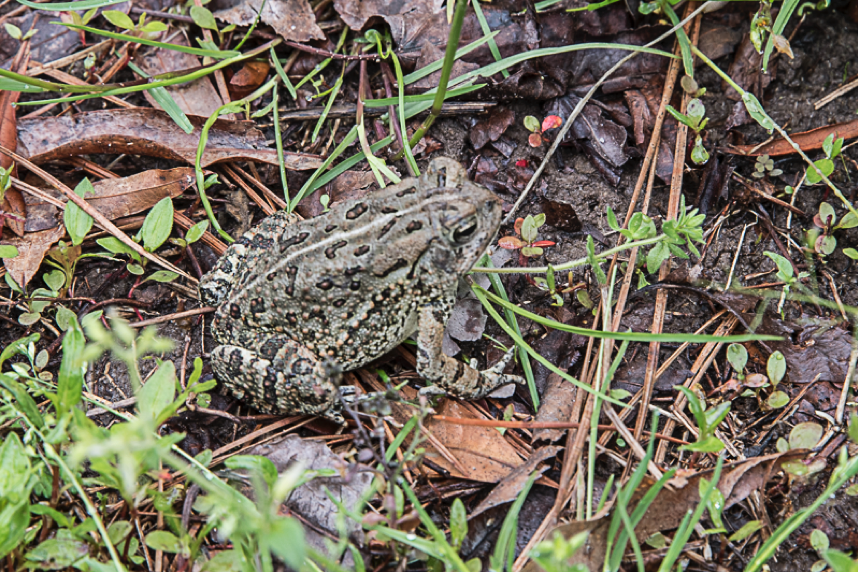
An American toad looks like the leaf litter on a forest floor.