
By Buffy Hastings.
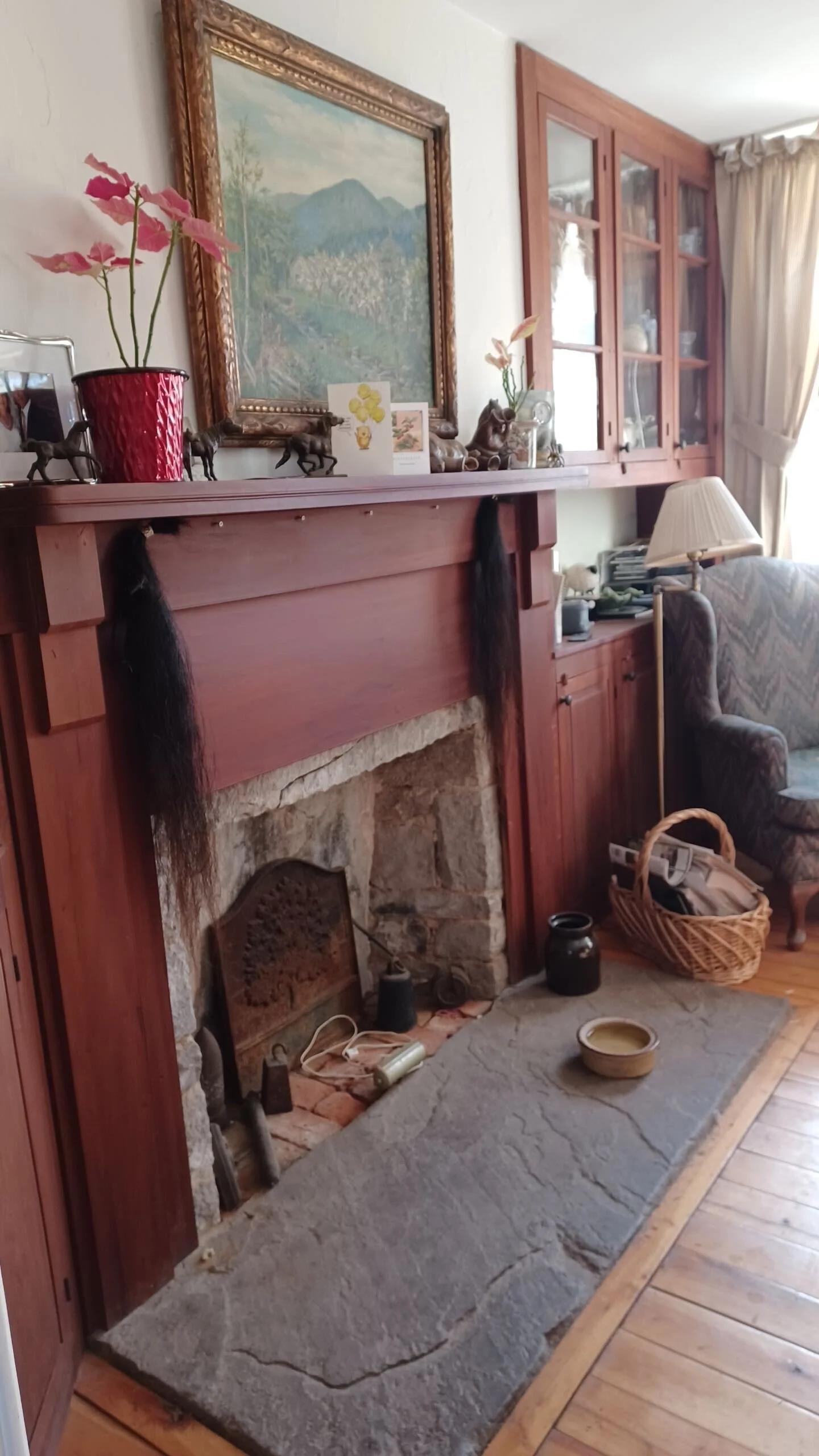
Cherry paneled dining room.
A friend of mine needed a barn. So, by himself, he went into his woods and felled sixty and eighty foot trees (worst-first forestry), drug the logs out, milled them into timbers and after drying, timber framed the barn. The rigging system he used to hoist and join the timbers solo was something to see. The foundation the sills sit on is made from stone he hauled out of the farm’s creek. This is what he did while the timbers dried. Of course he laid the stone himself. His home was built in 1760 and has a dining room paneled in cherry. The cherry tree was at the edge of his hay field and died so he cut it down, milled it and made the panels. He can show you where in a storm an elm tree fell at the corner of the sheep pasture, an elm tree that is now his dining room table. The fruit bowl inside the front door he carved from a dead ash. Everything in the home has a story. His hands made it. The home itself is a story, passed to him by the previous owner before she died just as her family had passed the farm onto her. To me, this is a home, not a house, because it is attached to place. In fact, there is little separation between the two.
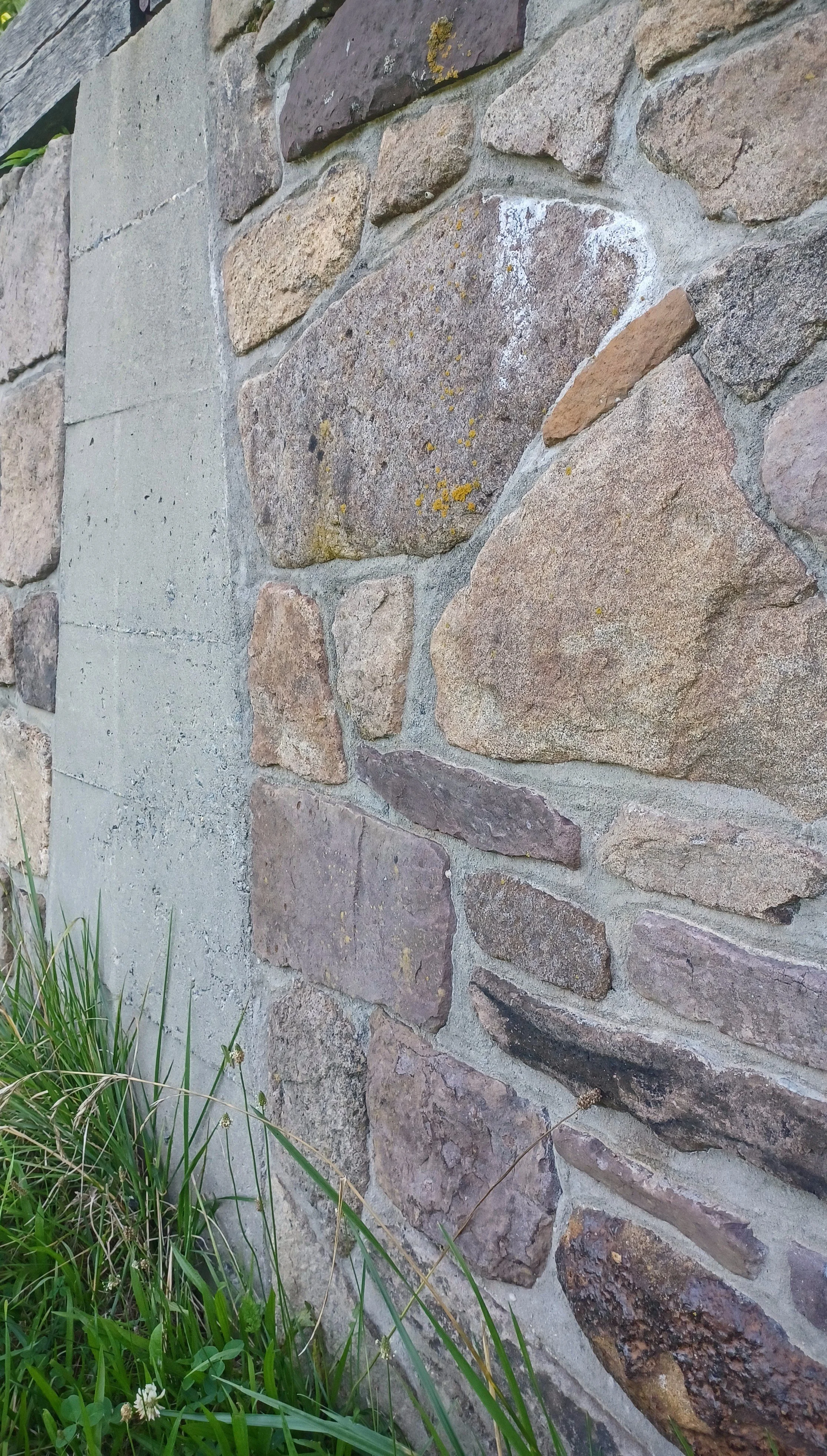
The foundation of the barn.
In this way the home becomes work, work the home, the projects endless because the work is the life, the life’s work. This takes the place into one’s self and so the self, place and home become one. We used to think this way culturally. Until 1911 open spaces available for purchase were called “home-sites.” Think about that, the way a site and the home intermingle. But then, with the Gilded Age crashing and real estate jargon taking over the language we stopped calling our spaces home-sites and began calling them “housing lots.” A lot is a term used in bulk buying, a commodity. Here then is the shift away from making a home to having a house. And we’ve moved further away even. In a recent issue of the Bucks County Herald the real estate section spoke of the houses in the area as “available inventory.” In a real estate agent’s circular covering Hunterdon County that I got in the mail the other day he wrote, “The market has remained strong but today’s buyers can be selective. Homes that are thoughtfully prepared, strategically priced and professionally presented with a custom marketing plan can continue to have the competitive edge…”
At what point, with language like this, the language of the stock market and not the homestead, aren’t we even talking about houses anymore let alone homes? When we talk about our dwellings with “strategy,” “inventory,” “custom marketing,” and “competition” there is no thought of passing-on, of continuity, multigenerational ownership and caretaking. Houses might as well be widgets. What is a community then? What’s to conserve? If we are to conserve anything, if conservation must remain our focus, we must change how we view and think about what we live in. Not just what we live on. Houses should become homes again.
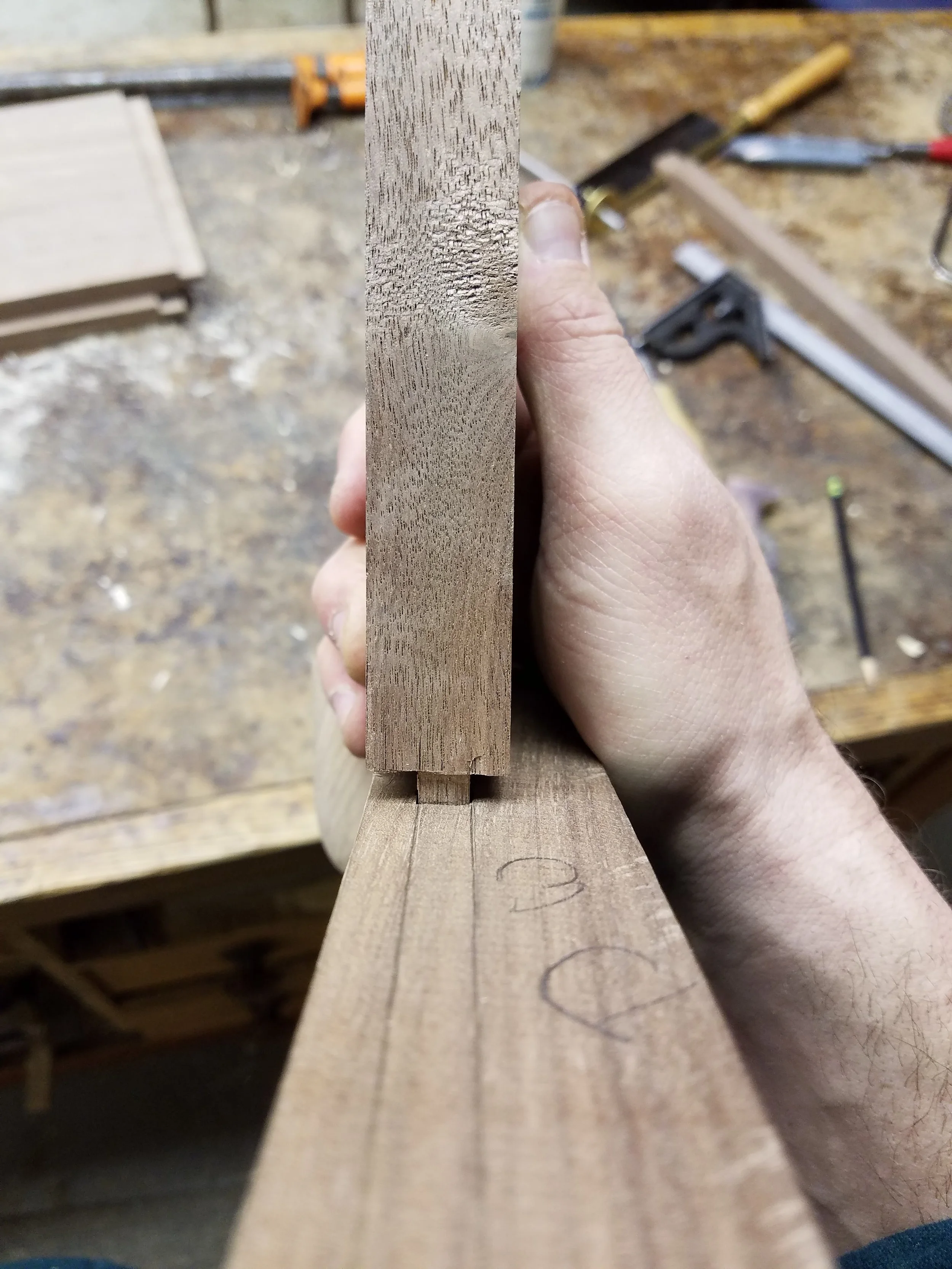
Working on the carcasse for a lowboy table for my house.
In going from homes to houses we’ve lost something. What we’ve lost is the home, a story and stories, attached to the land it is on. All of it thoughtfully laid out and put together like a good stone wall. Look around. What stories are we telling here? No longer places of work, production or education the home became a house, a bit of inventory to be flipped. Remember though that the gymnast flips from their feet and lands on their feet. Even having done the move they’re in the same position as before. The hotel development projects threatening Sourland Mountain at Big Bear Gear and Bald Pate are the same problem. Farms and beautiful places, the mountain devoured, into tourist traps. A tour, like a flip, is a circle. A circle is a zero, a nothing. The developers confuse this zero and relate it to money. This is the reduction of a place to numbers; a reduction devoid of community, of place, of generational continuity—people or plant.
Meanwhile there are still villages in Estonia where after a couple marries, the young groom, the new father-in-law and the groom’s father all get together to build the new couple’s home. Yes, home.
We can plant all the natives we want but what’s the point if we fill our houses with Ikea? There’s local woodworkers, potters, painters, stained glass artisans…
It is about hands and hand work and working together. About handing on. Home making, the home maker. Let’s tell better stories.
Even then the lawns-to-meadows movement is a great start. It is a great way for people to begin to look at the land their house sits on in a way more connected to place. On clear days it is always nice to open all the windows and doors and let the breeze pull through. We should keep them open in such a way that the meadow extends into the house, the metaphor moving inward, so that the house, full now of place and work, becomes a home.